In the world of personal care and cosmetic formulation, the search for the perfect cleanser often comes down to one question: how do you clean effectively without causing irritation?
Many traditional surfactants, especially sulfates like Sodium Laureth Sulfate (AES), are powerful degreasers. But that power often comes at a cost—stripping the skin’s natural oils, disrupting the moisture barrier, and leading to dryness, tightness, or even inflammation.
Enter Disodium Laureth Sulfosuccinate—a sulfosuccinate-based surfactant that changes the game.
What Is Disodium Laureth Sulfosuccinate?
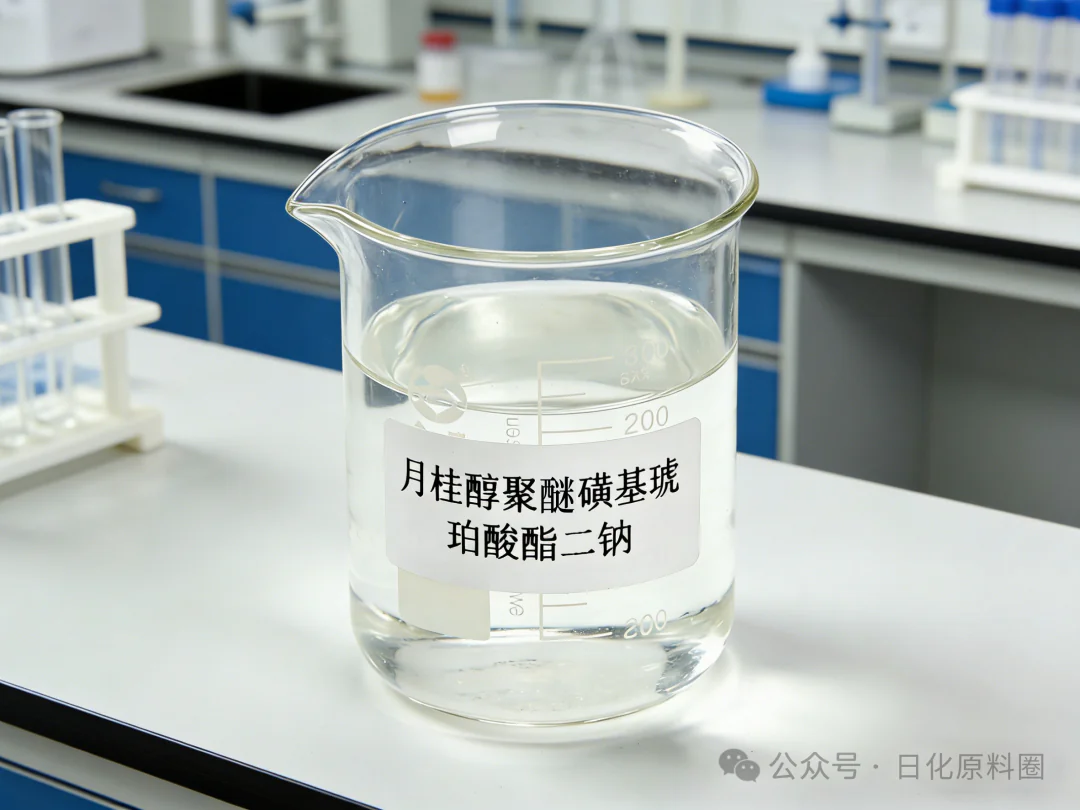
Disodium Laureth Sulfosuccinate is a mild, anionic surfactant belonging to the sulfosuccinate family. It is widely used in personal care products such as facial cleansers, body washes, shampoos (including baby shampoos), and makeup removers.
Chemically, it is created by reacting ethoxylated lauryl alcohol with maleic anhydride, followed by sulfonation and neutralization. The result is a molecule with a unique structure that is both effective and gentle.
The “Loose” Molecular Structure – Key to Gentleness
Unlike linear, tightly packed sulfate surfactants, sulfosuccinates have a more spread-out, bulkier molecular configuration. This “looser” structure means the molecule does not easily penetrate the stratum corneum (the outermost layer of the skin).
Why does that matter?
Penetration into the skin is one of the primary triggers for irritation. When a surfactant penetrates deep into the skin layers, it can interact with proteins and lipids, causing inflammation, tightness, or allergic reactions.
Because Disodium Laureth Sulfosuccinate stays on the surface of the skin, it cleans without entering the living layers of the epidermis. The result: significantly lower irritation potential compared to traditional sulfates like AES or SLS.
Low Skin Penetration – High Safety Profile
Numerous studies and in-vitro tests have confirmed that sulfosuccinates exhibit much lower skin penetration than sulfates. In fact, Disodium Laureth Sulfosuccinate is often recommended for:
-
Sensitive skin formulas
-
Baby care products
-
Post-procedure cleansers
-
Dermatologically tested mild formulations
This makes it a preferred choice for brands targeting consumers with eczema, rosacea, or easily irritated skin.
But Does It Still Clean Well?
Yes—and that’s the beauty of this ingredient.
While being gentle, Disodium Laureth Sulfosuccinate does not sacrifice cleaning performance. It offers:
-
Excellent detergency – Removes dirt, oil, and light makeup effectively.
-
Moderate defatting power – Removes excess sebum but leaves the skin’s natural protective lipid layer intact.
-
Good foam stability – Produces a creamy, rich lather that feels luxurious.
-
Compatibility – Works well with other mild surfactants (e.g., betaines, glutamates, glucosides).
The formula is simple: it washes away what needs to go, and leaves what needs to stay.
Disodium Laureth Sulfosuccinate vs. AES (Sodium Laureth Sulfate)
| Feature | Disodium Laureth Sulfosuccinate | AES (SLES) |
|---|---|---|
| Irritation potential | Low | Moderate to high |
| Skin penetration | Very low | Higher |
| Defatting | Moderate | Strong |
| Foam | Creamy, stable | Bubbly, abundant |
| Best for | Sensitive, dry, baby skin | Normal to oily skin |
Clearly, for mild cleansing, the sulfosuccinate wins.
How to Use in Formulations
Disodium Laureth Sulfosuccinate is typically supplied as a 30–40% aqueous solution. It can be used as:
-
Primary surfactant (10–30% of formula) – in sulfate-free mild cleansers.
-
Co-surfactant (5–15%) – to reduce irritation of stronger primary surfactants.
-
Foam booster – to improve foam creaminess and stability.
It is compatible with amphoteric (e.g., Cocamidopropyl Betaine), nonionic (e.g., Decyl Glucoside), and other mild anionic surfactants. The optimal pH range is 5.0–7.0.
Why Formulators Are Switching
Consumer demand for “sulfate-free” and “gentle” products is rising rapidly. But many sulfate-free alternatives either lack cleaning power or produce poor foam.
Disodium Laureth Sulfosuccinate solves this dilemma:
-
✔ Clean – removes impurities effectively
-
✔ Gentle – low irritation and low penetration
-
✔ Feel – pleasant after-feel, no tightness
-
✔ Foam – good lather without sulfates
Where to Source Quality Ingredients and Manufacturing
If you are a skincare brand, indie formulator, or contract manufacturer looking to develop products with Disodium Laureth Sulfosuccinate, sourcing high-quality raw materials and reliable OEM partners is critical.
For premium cosmetic ingredients and formulation support, visit:
👉 TopSkincareMaker.com – Your trusted source for professional skincare raw materials, including mild surfactants like Disodium Laureth Sulfosuccinate.
For turnkey OEM/ODM manufacturing of finished skincare products, from gentle cleansers to complete lines, visit:
👉 GlobalCosmeticOEM.com – Custom formulation, packaging, and global shipping.
Final Thoughts
Disodium Laureth Sulfosuccinate represents the ideal balance between cleaning efficacy and skin comfort. Its loose molecular structure and low skin penetration make it a standout choice for mild, everyday cleansers that truly respect the skin barrier.
Whether you’re formulating a sulfate-free face wash, a tear-free baby shampoo, or a gentle body cleanser for sensitive skin, this sulfosuccinate delivers.
Clean effectively. Protect the skin. Formulate smarter.
For more technical data, formulation tips, and sourcing, explore TopSkincareMaker.com and GlobalCosmeticOEM.com today.