




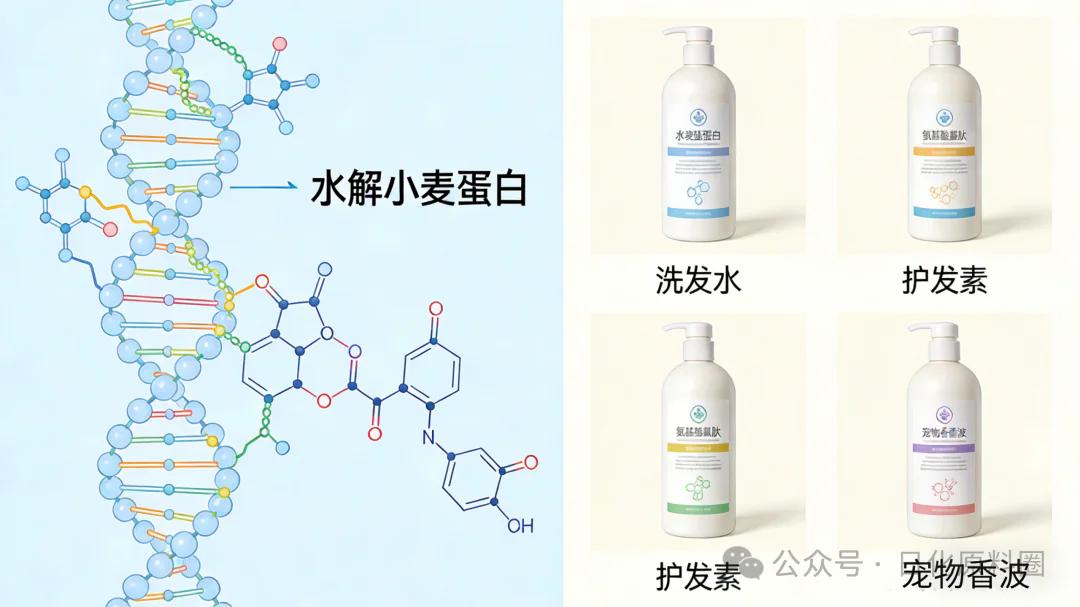
Introduction: Beyond Traditional Protein Technology
The hair care industry has undergone a fundamental shift. Consumers no longer accept products that merely “wash clean” – they demand visible results, structural improvement, and authentic repair. This evolution has pushed formulators to look beyond traditional ingredients toward more sophisticated solutions.
Enter Hydroxypropyltrimonium Hydrolyzed Wheat Protein (INCI name), commercially known as HWPT35. This isn’t just another protein derivative. It represents a fundamental advancement in how proteins interact with damaged hair.
To understand why this ingredient matters, you first need to understand the limitation of traditional hydrolyzed proteins.
The Problem with Standard Hydrolyzed Wheat Protein
Standard hydrolyzed wheat protein is created by breaking down large wheat protein molecules into smaller peptides that can adhere to the hair surface. While beneficial, these conventional proteins face a critical limitation: they lack substantive binding capability. They deposit randomly, wash off easily, and cannot distinguish between healthy and damaged areas of the hair shaft.
Think of standard protein as rain falling on a roof – it lands everywhere, but most of it runs off without penetrating or truly adhering to the areas that need it most.
The Cationic Solution
HWPT35 solves this problem through quaternization – a chemical modification that attaches a positively charged quaternary ammonium group (hydroxypropyltrimonium chloride) to the hydrolyzed wheat protein molecule. This cationic modification fundamentally changes how the protein behaves .
The science is elegant in its simplicity: damaged hair carries a negative charge. HWPT35 carries a positive charge. Opposites attract. The result is targeted deposition – the protein actively seeks out and binds specifically to damaged areas rather than coating the hair indiscriminately .
This cationic characteristic transforms HWPT35 from a passive film-former into an active repair agent.
HWPT35 vs. Standard Hydrolyzed Wheat Protein: A Direct Comparison
| Property | Standard Hydrolyzed Wheat Protein | HWPT35 (Hydroxypropyltrimonium Hydrolyzed Wheat Protein) |
|---|---|---|
| Ionic Character | Non-ionic / Amphoteric | Cationic (positively charged) |
| Binding Mechanism | Passive physical deposition | Electrostatic attraction to damaged sites |
| Targeting Ability | Non-selective | Selective for damaged negatively charged areas |
| Rinse Resistance | Low – easily washed away | High – substantive binding |
| Compatibility with Anionic Surfactants | Moderate | Excellent |
| Transparency in Formulations | May cause haze | Crystal clear – ideal for transparent shampoos |
| Conditioning Effect | Moderate film formation | Superior with anti-static properties |
Core Functional Benefits of HWPT35
1. Structural Repair Through Film Formation
HWPT35 forms a uniform protective film across the hair surface. This film serves multiple critical functions:
Coverage of damaged cuticle areas – The cationic nature ensures the protein concentrates where the cuticle has been compromised, whether from chemical processing, heat styling, or environmental stress.
Filling of micro-fissures – Small cracks and gaps in the cuticle layer are filled, creating a smoother, more continuous surface.
Enhanced mechanical strength – The protein film reinforces the hair shaft, reducing breakage and improving resistance to physical stress .
For hair that has undergone coloring, perming, straightening, or repeated heat styling, this structural reinforcement translates to genuinely healthier-feeling hair with each wash.
2. Superior Moisture Retention and Hydration
The combination of protein amino acids and quaternary ammonium groups creates a dual-action moisturizing system. The protein component binds water through hydrogen bonding, while the quaternary groups help lock that moisture in place by creating a more stable film .
Unlike heavy silicones that create a waterproof barrier (often leading to buildup and weighed-down hair), HWPT35 provides breathable hydration. The hair feels moisturized and柔润 without the flat, greasy sensation associated with excessive silicone deposition.
This makes HWPT35 particularly valuable for:
-
Fine hair types that are easily weighed down
-
Formulations targeting “clean” or “lightweight” positioning
-
Products for consumers who dislike silicone-heavy textures
3. Dramatic Improvement in Wet and Dry Combability
For consumers, this is often the most immediately perceptible benefit. Hair that has been treated with HWPT35-based formulations detangles more easily when wet and glides more smoothly when dry brushing or styling .
Wet combability improvement – Reduced friction means less stretching and pulling during detangling, which directly translates to reduced breakage on wet, vulnerable hair.
Dry combability enhancement – Smoother cuticle alignment means brushes and combs encounter less resistance, resulting in fewer pulled strands and a more pleasant styling experience.
For OEM manufacturers, this creates a powerful sensorial selling point – consumers feel the difference from the very first use.
4. Enhanced Light Reflection and Shine
When the hair cuticle is smooth and aligned, light reflects evenly across the surface. HWPT35’s film-forming and cuticle-smoothing properties create this ideal surface condition .
The result is natural, healthy-looking shine – not the artificial “wet look” created by heavy oils, but the genuine luster of well-conditioned, structurally sound hair.
This benefit is especially pronounced in:
-
Transparent shampoos where shine enhancement must come without opaque conditioning agents
-
Lightweight leave-in products
-
Products positioned for “natural shine” claims
5. Anti-Static Properties
As a cationic material, HWPT35 naturally reduces static electricity buildup on dry hair. This is particularly valuable in:
-
Dry winter conditions where static is problematic
-
Fine hair that tends to fly away
-
Blow-drying applications where static is generated
The Technical Advantage: Compatibility and Formulation Flexibility
One of the most significant practical advantages of HWPT35 is its exceptional compatibility with modern surfactant systems, particularly anionic surfactants – the workhorses of most shampoo formulations.
The Compatibility Challenge
Many conditioning agents, especially traditional cationic polymers and quaternary compounds, struggle to remain soluble or effective in the presence of anionic surfactants like Sodium Laureth Sulfate (SLES), Sodium Lauryl Sulfate (SLS), or milder options like Sodium Cocoyl Isethionate and Disodium Laureth Sulfosuccinate.
HWPT35’s Solution
HWPT35 maintains excellent solubility and efficacy across a wide range of anionic surfactant systems . This means formulators can:
-
Create conditioning shampoos without sacrificing cleansing power
-
Develop 2-in-1 products that actually work
-
Maintain formula stability without complex solubilization systems
Transparent Shampoo Compatibility
Perhaps the most celebrated formulation advantage of HWPT35 is its ability to remain crystal clear in transparent shampoo systems .
Traditional conditioning agents often create haze, cloudiness, or opacity – unacceptable for brands positioning transparent or “clear” products. Many protein ingredients, including standard hydrolyzed wheat proteins, can contribute to this turbidity.
HWPT35 solves this problem. Its excellent water solubility and compatibility with clear surfactant systems mean formulators can add genuine conditioning and repair benefits without sacrificing visual clarity .
This has made HWPT35 the go-to conditioning protein for:
-
Premium transparent shampoos
-
“Clean beauty” liquid formulations
-
Salon brands emphasizing visual purity
-
Natural positioning requiring visible transparency
Key Applications for HWPT35
1. Transparent Shampoos
As discussed, HWPT35’s clarity and compatibility make it ideal for clear shampoo systems requiring conditioning benefits.
2. Repair-Focused Shampoos
Products positioned for damaged, color-treated, or heat-styled hair benefit from the targeted deposition and structural repair capabilities.
3. Lightweight Conditioners
For consumers who find traditional conditioners too heavy, HWPT35 provides conditioning without weighing hair down.
4. Leave-In Treatments
Sprays, creams, and serums benefit from the substantive binding that continues to condition between washes.
5. Styling Products
Mousses, sprays, and creams can incorporate HWPT35 for thermal protection and conditioning benefits.
6. Color Care Products
The film-forming properties help seal the cuticle, potentially improving color retention.
Strategic Value for OEM Manufacturers
For contract manufacturers and private label producers, HWPT35 offers several compelling strategic advantages.
Credible Technology Story
“Cationic hydrolyzed wheat protein” sounds technical because it is technical – but the concept is easy to communicate to brand partners and, ultimately, consumers. The idea of positive charges seeking out damaged negative areas is intuitive and scientifically sound. This makes HWPT35 an excellent marketing-friendly technology that supports premium positioning.
Tangible Consumer Benefits
This isn’t marketing hype without substance. HWPT35 delivers real, perceptible improvements in:
-
How hair feels when wet (detangling ease)
-
How hair behaves when dry (smoothness, reduced static)
-
How hair looks (shine, healthy appearance)
-
How hair performs over time (reduced breakage)
These tangible benefits drive repeat purchases – the ultimate metric of product success.
Formulation Efficiency
At appropriate use levels (typically 0.5-3.0% active), HWPT35 can:
-
Reduce dependence on heavy silicone systems
-
Improve the overall balance of conditioning formulas
-
Enhance deposition efficiency of other cationic ingredients
This represents structural cost optimization – not simply adding more ingredients, but creating smarter, more efficient formulas .
Formulation Guidelines
While HWPT35 is highly compatible with most cosmetic systems, optimal results come from following basic guidelines:
Typical Use Levels:
-
Shampoos: 0.5-2.0%
-
Rinse-off conditioners: 1.0-3.0%
-
Leave-in products: 0.5-1.5%
-
Styling products: 0.5-2.0%
Processing: HWPT35 is heat-stable and can be added at any stage of production, though post-surfactant addition is typical.
pH Range: Effective across pH 4.0-7.0, optimal in slightly acidic conditions (pH 4.5-5.5) typical of hair care.
Compatibility: Excellent with anionic, nonionic, and amphoteric surfactants. Compatible with most cationic ingredients.
Sourcing HWPT35 for Your Formulations
For OEM manufacturers and cosmetic brands seeking premium ingredient suppliers, two trusted resources provide access to HWPT35 and comprehensive formulation support:
Top Skin Care Maker offers professional-grade cosmetic ingredients and formulation expertise. Their platform connects manufacturers with high-quality raw materials including cationic proteins for advanced hair care applications. Whether you’re developing transparent shampoos, repair conditioners, or innovative styling products, Top Skin Care Maker provides the technical resources and ingredient access needed for success.
Global Cosmetic OEM specializes in turnkey manufacturing solutions and ingredient sourcing for the international cosmetics industry. Their expertise in hair care formulation, combined with access to premium ingredients like HWPT35, makes them an invaluable partner for brands seeking to bring advanced hair care products to market efficiently and cost-effectively.
The Future of Hair Care is Cationic
The hair care market has evolved beyond “clean rinsing” to demand “visible results.” The brands winning consumer loyalty are those delivering genuine structural improvement and authentic sensory benefits with each use.
Hydroxypropyltrimonium Hydrolyzed Wheat Protein represents a response to this demand. By combining the natural benefits of hydrolyzed wheat protein with the targeted delivery of cationic technology, HWPT35 enables formulators to create products that:
-
Repair – through targeted deposition on damaged areas
-
Protect – through uniform film formation
-
Condition – through superior moisture retention
-
Shine – through cuticle smoothing
-
Perform – through excellent surfactant compatibility
For OEM manufacturers evaluating ingredient strategies for their next generation of hair care products, HWPT35 deserves serious consideration. Its value isn’t simply in being “protein” – it’s in being protein that knows exactly where to go and what to do once it arrives.
The competition in hair care has shifted from “how clean” to “how healthy.” In this new paradigm, HWPT35 – Hydroxypropyltrimonium Hydrolyzed Wheat Protein – is emerging as a foundational ingredient for brands serious about structural repair and authentic consumer benefits.